

Observing, scoring and analysing client’s performance on a standardised assessment (test)
In this scenario, students will have the opportunity to learn about the protocol for conducting a standardised occupational therapy assessment for the evaluation of performance component(s) (e.g. cognitive function, visual-perceptual skills….). Students will learn about test administration, scoring and interpretation.
This simulation experience is focused on assessment methodology, and therefore can be used for the practice of these skills with any standardized test used in occupational therapy assessment of performance components (e.g. RBMT, RPAB, LOTCA, BADS, …)
This is a digital (online) simulation using a controlled, reproducible scenario.
Students gain experience in observing and analysing the client’s performance and scoring the test by observing client’s performance on a video.
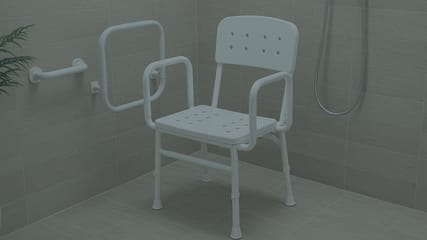
OT Advice: Home modifications in COPD and hip recovery
In this simulation, students will interact with a standardized patient portraying Maria, a 70-year-old woman recovering from hip surgery while managing COPD. Students will explore ways to help her carry out daily activities more easily and safely at home, with a particular focus on self-care in the bathroom (variations possible). They will formulate practical occupational therapy recommendations to enhance her comfort, independence, and participation in meaningful daily tasks.
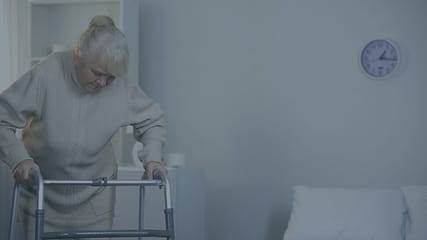
Video observation OT intervention in Total Hip Prosthesis
This scenario provides a simulation for video-based simulation and/or role play. This scenarios is designed as hybrid scenario which can be applied as video based simulation (online) or role-play (online and/or on-site).
Scenario contains information about a client who undergone a total hip replacement surgery. Clients lives in nursing home and needs information about precations and intervention for assistive device use. There is one video contains general mobility of the client, learners are expected to create and intervention plan for assistive and adaptive device training for mobility and dressing.

Video Observation and Analysis: School-Based Occupational Therapy Intervention for a Child with ADHD
This simulation-based learning scenario aims to enhance students’ skills in observing, analyzing, and critically evaluating occupational therapy (OT) interventions for children diagnosed with Attention Deficit Hyperactivity Disorder (ADHD) within a therapy room setting.
Students will observe a pre-recorded video of an OT conducting a one-on-one session with a child in a culturally relevant pediatric therapy environment. The video demonstrates developmentally appropriate and contextually grounded strategies designed to improve the child’s attention, support emotional regulation, and manage hyperactive behaviors.
Learners are expected to engage in critical reflection on both the therapeutic techniques used and the environmental and socio-cultural factors that influence occupational performance.

Remote Occupational Therapy Assessment for Stroke: Administering the MMSE
This simulation focuses on assessing cognitive functions in a patient with stroke using the Mini Mental State Examination (MMSE) within a telerehabilitation setting. Designed for intermediate to advanced occupational therapy students, it allows learners to practice conducting cognitive assessments remotely, interpret findings, and communicate results professionally and empathetically. Students take on the role of an occupational therapist, working with a standardized patient in real time, and must navigate ethical, technical, and clinical reasoning challenges throughout the session.
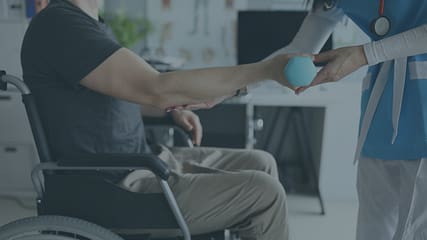
Occupational Therapy Intervention Planning and Implementation for a Person with Parkinson’s Disease
This simulation scenario focuses on planning and implementing an occupational therapy (OT) intervention for an individual diagnosed with Parkinson’s disease. It aims to enhance students’ clinical reasoning, practical skills, and ability to provide person-centered care in a highly authentic and structured learning environment.
Students will observe the patient’s transfer activities, plan and apply appropriate transfer techniques, and recommend assistive devices. The scenario is designed for in-clinic implementation with standardized patients. However, it can also be conducted using role-play with senior students, depending on available resources and institutional context.

Standardized assessment of a patient with neurological condition
This scenario contents a assesment of a patient with parkinson’s disease for OT and COPM.
The scenario includes expected learning outcomes, scenario flow with expected actions and all details regarding simulation scenario.

Occupational interview with a client with a neurological condition
This scenario contents a first interview of a patient with Parkinson’s disease for OT assessment. The scenario includes expected learning outcomes, scenario flow with expected actions and all details in regard to simulation scenario.

Ethical decision-making: Culturally home visit
The therapist makes a home visit. The client has been in an accident that has left her with both physical and mental challenges, and she has difficulty to cope with household chores. The client, her spouse and OT have conflicting views about what kind of services the client need.
After home visit the therapist wants to discuss an ethical problem and solution with the employer.
Resolving the ethical question: what should be done in this situation? What kind understanding of culture you should have? What to do when there is a difference in values and attitudes between you, the client and her spouse? How can you support the client in dealing with everyday challenges? What information do you need as an occupational therapist?

Ethical decision making: Sexual identity and abuse
This simulation case involves meeting a client in a difficult situation. The client describes a domestic violence experience she has had during a home visit. The video unfolds through the eyes of the therapist.
Resolving the ethical question: what should be done in this situation? Should you intervene in a situation of intimate partner abuse? How can you support the client in dealing with sexuality and sexual identity issues? What information do you need as an occupational therapist?

Ethical decision-making: Client refuses a home visit
The therapist makes a home visit, but the client does not want to receive the therapist. The client has just been discharged from the hospital, and the purpose of the visit is to find out how the client is coping at home. After home visit the therapist wants to discuss an ethical problem and solution with the employer.
Resolving the ethical question: should the occupational therapist go home against the client’s will or should the therapist refrain from going, and is it then a case of abandonment? How does the student justify their decision, is it a legal problem or an ethical challenge?

Leila- home visit and client interview
The simulation takes place during a home visit after Leila being discharged from the hospital. The purpose of the home visit is to identify, through an interview, the need for therapy process and activities that are meaningful to the client. During the home visit, Leila is accompanied by a member of her family and, if desired, a home care worker.

Hand rehabilitation and activity analysis
The simulation takes place during an outpatient clinic visit situation. This simulation exercise involves an outpatient visit where the client has symptoms of numbness in her hand. This makes it difficult for her to participate in meaningful occupations. Based on interviews and observations, occupational therapists must determine the need for occupational therapy and the occupational challenges faced by clients.

Parental guidance- Occupational therapy process and interview
The parent calls an occupational therapist to find out how to get the child to an occupational therapy evaluation. The parent wants to know what occupational therapy is, whether it costs anything and who organises it. The parent also wants to know if their child may need occupational therapy.

Define, explain and advocate for the professional role and value of occupational therapy
In this scenario, students will engage in a simulated situation in the role of occupational therapist. The scenario involves a meeting (online or live) between occupational therapists and a stakeholder (individual, group or organization with a specific interest or stake in the potential role, activities and value of occupational therapy).
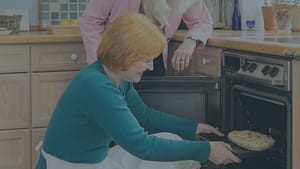
Occupational analysis: Identifying and analysing performance components
In this scenario, students will have the opportunity to learn, practice and perform occupational analysis and synthesis in a safe environment. This is a digital (online) simulation using a controlled, reproducible scenario.

Observation and analysis of occupational performance during a cooking activity in a client with Korsakoff’s Syndrome
Students observe a client with Korsakoff syndrome performing a daily activity: preparing soup. Prior to the observation, students review the ICF model and formulate a clear observation goal based on the provided case information. They complete the ICF with the available data and practice the task (soup preparation) at home, breaking it down into sub-steps through a pre-execution task analysis.
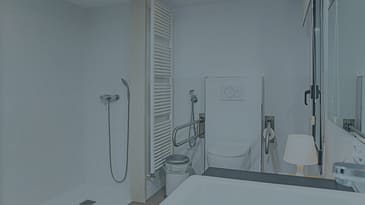
Designing home modification plans through case analysis and 360-degree video observation
In this scenario, students prepare by reviewing the ICF framework and the theory behind reimbursement for home modifications. During the class, students work in groups of four to analyze a case, identify the occupational therapy question, and examine 360-degree videos and a floor plan to collaboratively develop a plan. In the second phase, each group presents their plan to the others. As a final assignment, students write a professional report to the team with the necessary home modifications and therapy goals.

Assessing handwriting readiness with the WRITIC assessment
The Writing Readiness Inventory Tool In Context (WRITIC) assessment is an occupation-based tool designed to evaluate handwriting readiness in 5- to 6-year-old kindergarten children. It is intended for use during the pre-writing phase, particularly with children for whom teachers have concerns about handwriting development. It is recommended to administer the WRITIC assessment approximately 5 to 6 months before the start of formal handwriting instruction.

Interprofessional communication in an acute clinic: Consultation with the nursing staff
The simulation provides an opportunity to learn, practise and perform a structured consultation for room adaptation in an inpatient environment, while providing verbal instructions to the responsible nurse on how to adapt the room of a patient who suffered a stroke two days ago and is currently experiencing motor and visual neglect, as well as severe left-sided hemiplegia.
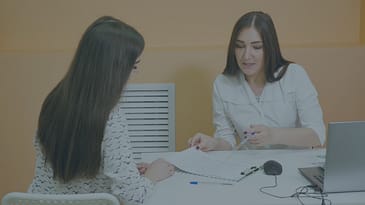
Conducting the DASH assessment with a rheumatological client
The aim of simulation is to carry out a diagnostic interview with the DASH assessment in order to gain a detailed insight into the impairments in everyday life. The simulation’s goal is to fill out the DASH while asking the client verbally since the client can’t fill out the assessment by himself/herself due to limitations of the hand.
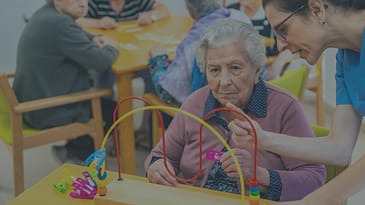
First Contact: Using the AOTA Occupational Profile with a Low-Vision Geriatric Client
The simulation offers the opportunity to learn, practice and perform a structured occupational therapy interview while using the AOTA occupational profile in a safe and simulated environment.

Therapeutic interview with intentional orientation to empathy mode
In this scenario, students will practice therapeutic communication skills through conducting a short, unstructured therapeutic interview/ conversation with intentional orientation to empathetic mode with an elderly client in need of psychological support.
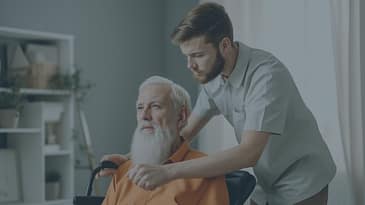
Dressing training for neurological client in sub-acute phase of rehabilitation
This scenario is intended to be delivered as an in-situ simulation experience in a neurorehabilitation hospital or clinic (client’s bedroom or occupational therapy space). The simulated participant is portrayed by a trained volunteer, such as an occupational therapy practitioner.

Prepare and conduct an occupational interview with a client (COPM)
In this scenario, students will prepare and practice conducting an initial occupational interview with a client using the COPM tool.
This is an on-campus (classroom) simulation using a controlled, reproducible scenario.
The learning scenario applies a role play modality, where students working in small groups participate in the scenario in the roles of the therapist, client or observer. It takes place in the context of on-campus practical classes.
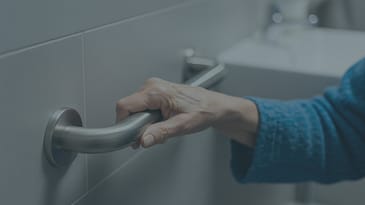
Occupational analysis of the home: COPD and hip surgery
This simulation involves a role-play with Maria, a 70-year-old recovering from hip surgery and living with COPD. Her goals include independence in self-care, symptom management, maintaining household roles, and social participation. Students will conduct an occupational and home analysis (with a focus on the bathroom, variations possible), identify her needs, and define goals as a basis for future interventions to enhance mobility and quality of life.
COPM Assessment: COPD and hip recovery
The simulation involves role-play with a simulated client. The goal is to conduct a COPM assessment with Maria, a 70-year-old recovering from hip surgery and managing COPD. Students will assess her needs, set goals, and develop a plan to improve her mobility and quality of life.

ADL-training with a neurological client: dressing the upper body
The client to be observed has been diagnosed with a brachial plexus injury after a heavy motorbike accident. He also shows cognitive deficits in short-term memory and memorizing ability throughout the rehabilitation stay (which the therapist is not informed yet).
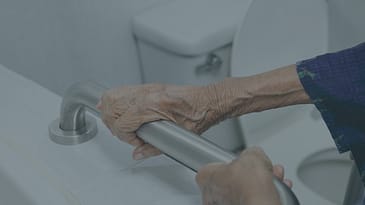
Bathroom safety in OT: Simulation with family dynamics
The client to be observed has been diagnosed with both diabetic retinopathy and type 2 DM, is overweight, at risk of falling due to dizziness and has a history of a radius fracture due to a fall in the bathroom on the way to the shower.

Making Breakfast Work: ADL Observation and Assistive Advice After a Wrist Fracture
The client who is being observed has been diagnosed with diabetic retinopathy as well as DM type 2 and has restrictions on movement and strength of the dominant hand because of a radius fracture after falling on the ground. The aim of this simulation is to observe the everyday situation “preparing breakfast” and identify relevant restrictions based on the diagnoses.